Design Development
Introducing AniMap
AniMap is a platform for animators to build and discover local communities. It`s a centralized platform to foster connections between animators in both a social and professional capacity. The website allows users to find other nearby animators, fostering social and professional connections. This also helps create a space where new animators can easily access a community for support. A big problem is that animation can be a very isolating career and it can have a barrier of high activation energy for people to connect with one another. By consolidating information about animation-related events in one place, it simplifies the process of finding and attending events. This reduces the effort and time required to discover these opportunities.
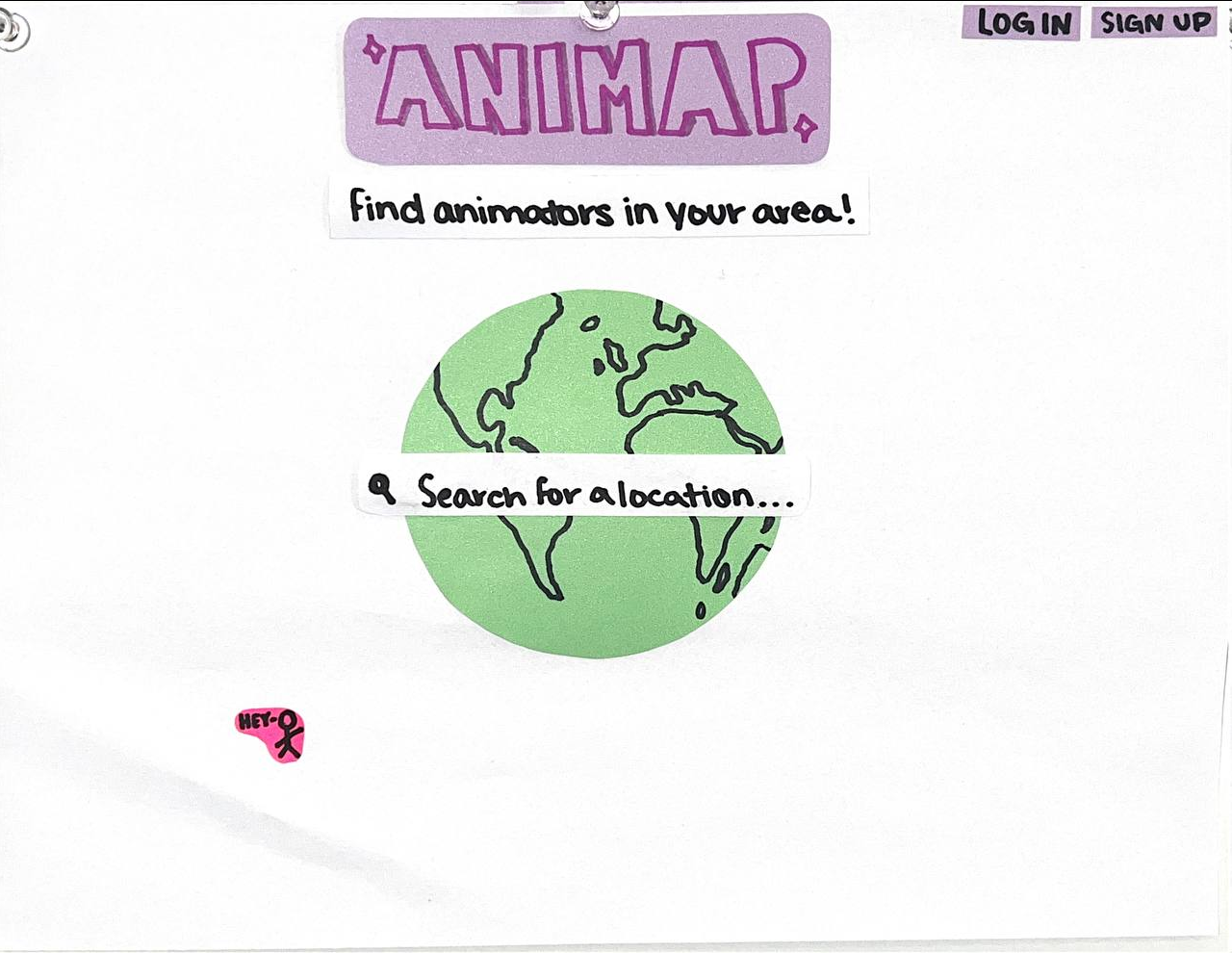
Figure: AniMap landing page, featuring a search bar, login, and signup
On the homepage of AniMap, users will be presented with a map of the world and a text box to enter more specific information regarding their location (ie. zip code or city name). Once the site has filtered search results to their preferred location, pins will appear on the map of that area representing different local animator profiles and event descriptions. There will also be an option to toggle a list version of this information. A user can hover over the different pins and get a short summary of the profile or event. If the user is interested in the pin, they can then click to get an expanded version with more detailed information. Profiles and event descriptions will have different pin images so they are easy to distinguish. On each profile, there will be information about the animator and what they're interested in as well as their preferred method of contact. Clicking on event pins will show a description of the event and any RSVP details/requirements.
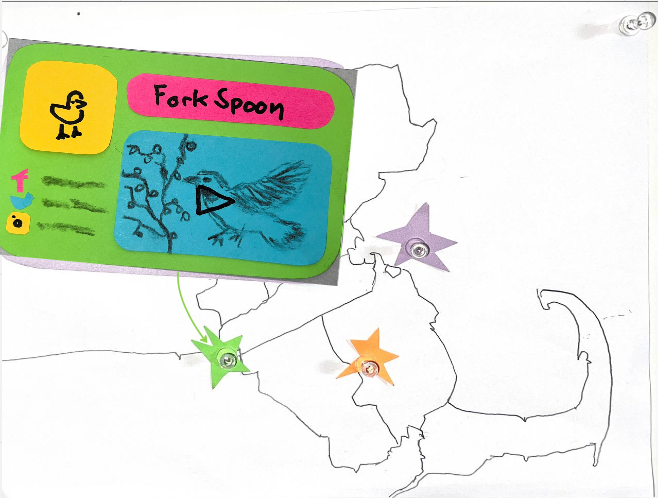
Figure: AniMap map page, stars indicate local animator profiles
This page design stems from the information we collected in user interviews and research. Animation can be a very siloed career, especially for newer or independent animators who may not be working with a large studio or group. The idea isn't to recreate the existing value provided by social media (ie. creating online communities) but rather create in-person connections with other animators in a way that social media currently doesn't. This also helps create a space of new animators to find strong local communities and seek connections with peers/mentors nearby. Overall, the site creates a place that consolidates information about events and animators while reducing the activation energy needed for animators to start building or expanding their communities.
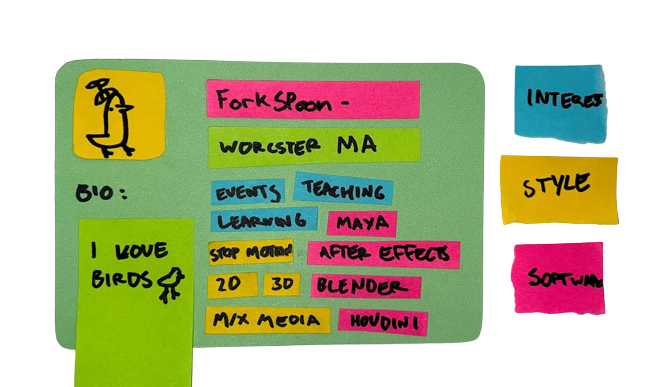
Figure: AniMap profile page, featuring tags for user interest, animation style, and software expertise
In terms of facilitating connection, this design meets that in some ways but falls short in others. For example, it's very effective in terms of creating one place for people to look rather than needing to sort through tons of social media pages or hear things via word of mouth. However, the site itself functions more like an information database, it doesn't address the problems around actually planning or creating events for animators to attend. That being said, providing space both for individual connections along with joining a larger community makes it so that our site is fairly versatile in fulfilling the needs of people who are in different stages in their careers or have different interests.
Key Insights
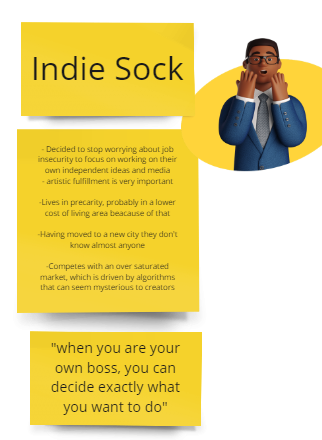
The design we have been elaborating so far ties in to the personas we have constructed to better understand the user group we are designing for. Having had more contact with animators, we focused on making something appealing to what we saw as the most common traits that different animators, or people in the business of animation would like. Our persona, Indie Sock is supposed to represent the average independent animator, whose goal is to create their own self-sustaining business through their passion:
-
For Indie Sock, AniMap is an incredibly exciting tool as this will enable them to more easily find both community and collaborators that are local. This is important for an independent animator's early career, as a lot of the business that occurs in the scene is usually through mutual and personal connection. This is also something that is very appealing to the next persona, Career Carrie:

-
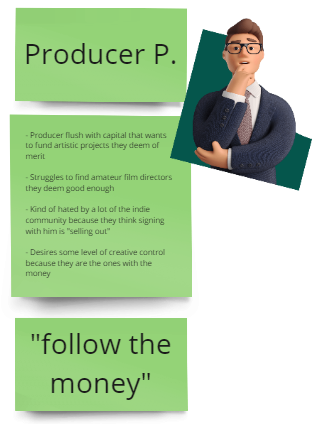
Similarly to Sock, Carrie's interest in AniMap comes from their desire to kick start their animation career by both showing off their work and being able to find other potential work and connections though the website. Just as independent animation a lot of the times works through informal trust relations, successful careers in animation also rely on a person's network and portfolio. This leads us to the final persona, Producer P.:
-
-
It is a producer's job to organize the financial and logistical aspects of almost any large scale production. To this end, producers are often tasked with finding and hiring the animators, voice-actors, and possibly even directors of large products. It is also common for producers to want to find local artists as this will make the logistics significantly easier. AniMap enables Producers to quickly and easily find animators (and potential other roles that are still in development) that are both local and reputable due to their portfolio being public. For a producer, having the ability to locate and find groups of people easily would make their life a lot easier. On the animators side, knowing that having a portfolio in AniMap could lead to them being hired, incentivises a diverse set of animators to use the website and keep it alive and thriving.
Alternatives We Considered
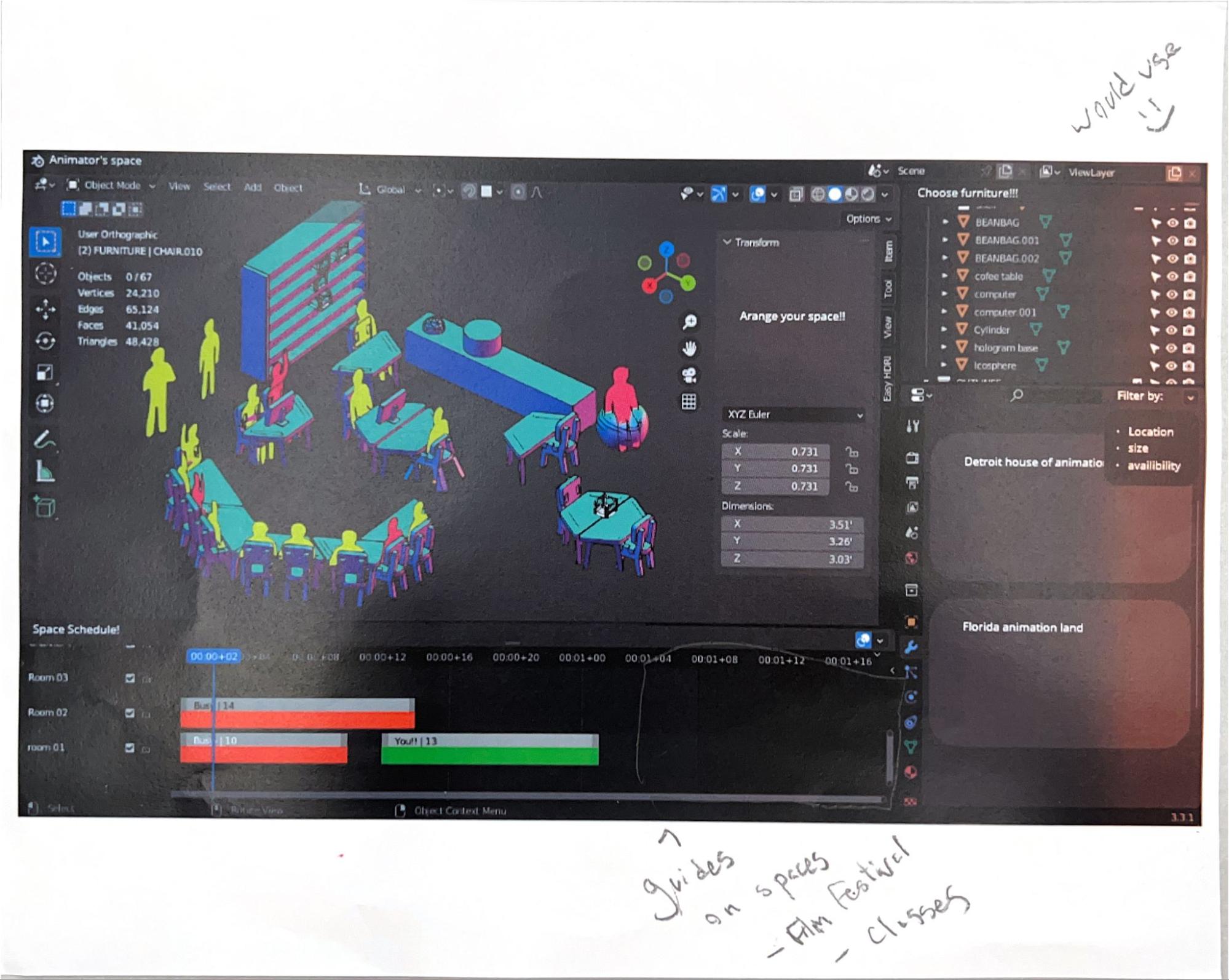
Figure: Above is an annotated sketch model of the Animator's Cafe booking page based on blender. One could design the space using the typical blender workflow. Once they have their spice designed they can use the timeline utility at the bottom of the screen to finalize their booking. Below is a sketch model of the Re-animate website. The sketch shows the main project page which is the page shown to users after they have selected a re-animate project to be a part of.

The other two ideas we focused on were an Animator's Cafe and a site called Re-Animate (both shown above). The Animator's Cafe idea was about creating a permanent space for animators to co-work or socialize. The site would be structured like common animation tools so booking space in the cafe would feel very similar to animating and be a more engaging platform than just booking a time slot. The Re-Animate site focused on the idea that one way animators connect with each other is by working on reanimation projects where a group of animators each take a section of a piece of media and re-create it in their style and then all the clips are strung together. This is an interesting opportunity for an animator to both work on their own skills but also collaborate and socialize with other animators. The site would focus on organization of these events so that it's easier to access with wider reach. We ended up going with the AniMap idea for a few different reasons. The main reason is that we found that there isn't a lack of community events and opportunities to socialize; the main block seems to be the ability to share this information. The young, independent animators we talked to enjoy going to events for animators and socializing. They even feel confident that they could arrange their own event if they wanted. As a result, we believe that we don't need to facilitate the type of interaction that fosters connection between animators, we just need to aid the process animators find out about others.
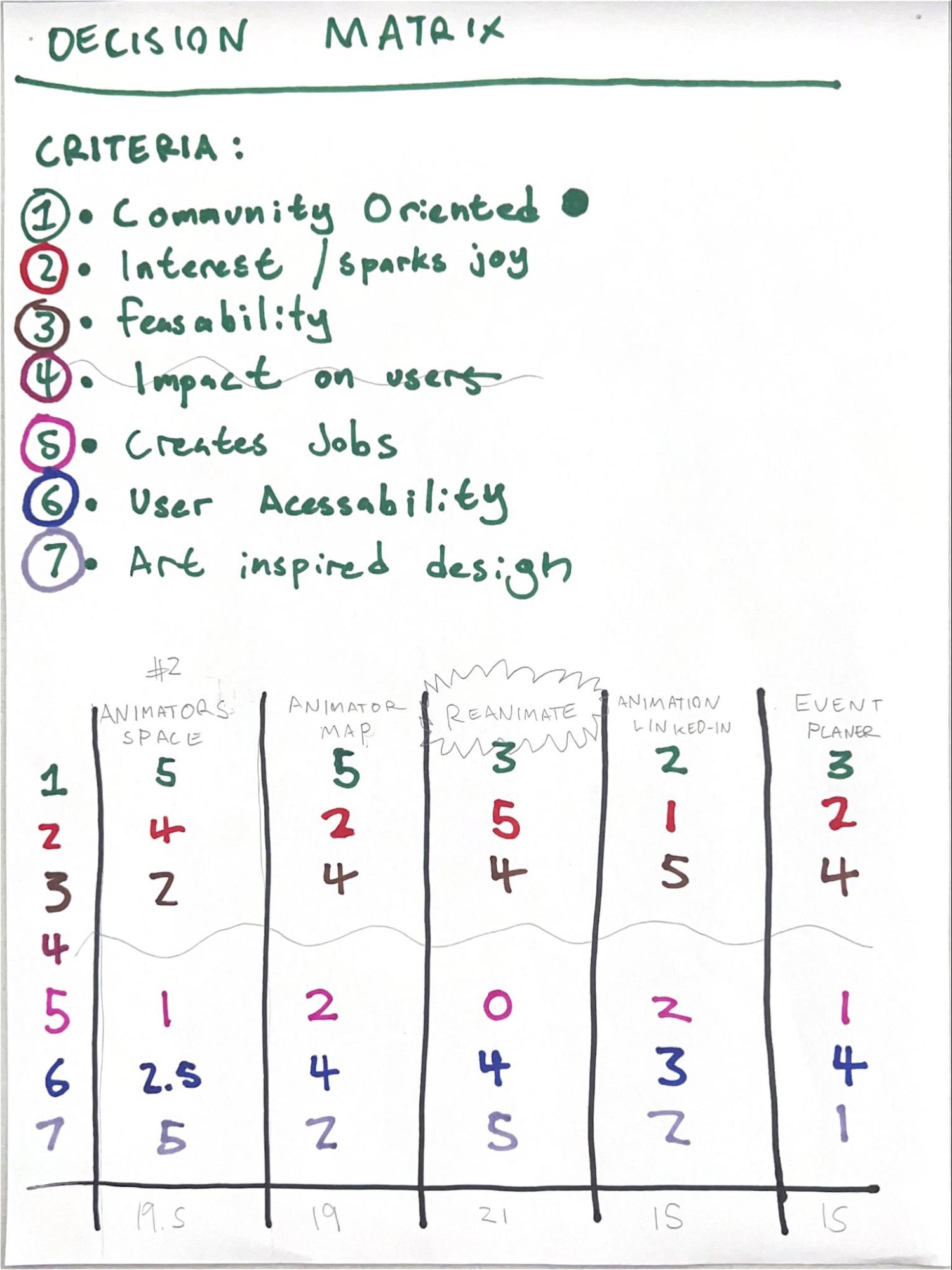
Figure: Team decision matrix selecting the 3 ideas we would primarily pursue for this phase, and create co design material for.
Feedback from Users & Design Evaluation
In both interviewing, and co-designing, we learned a lot about not only the function of interfaces for artists and animators, but about the importance of form, and playful design.
Our first codesigner was a young, independent, early-career animator from the Detroit area who we'll be referring to using the pseudonym “Fall”. We presented Fall our three main ideas (Re-animate, Animator's Space, and AniMap). Fall did not like the Animator's Space. She felt the quirky interface for booking space based on standard animation software was intimidating and would very likely scare a lot of animators away from the space. She also emphasized the importance of efficiency when it comes to using these tools that requires a lot of customization. She felt that people would not want to go through the hassle of either applying their customizations or re-learning the defaults in order to book the space through our website. On the other hand, Fall liked the Re-animate idea the best. Fall had participated in some re-animate projects before and really understood the added value of having a tool like the Re-animate website to aid with organizing the project. Fall also really enjoyed the AniMap idea. Fall saw the value in having a fun and interactive database with information for animators but felt that it lacked some of the fun that surrounded the Re-animate website. Fall suggested that adding a community bulletin board to the website could be a fun way to engage website visitors more. The community bulletin board could be an interactive portion of the website that presents local events in your area. Seeing the bulletin board update with fun new events and shoutouts could be a reason to come back to the website and engage with it in ways that don't feel like searching for something on Google. A possible implementation of the bulletin board based on Fall's specifications can be seen in the figure below. The figure below also contains some other suggestions from summer like having a scrolling profile that allows you to display pictures in addition to videos.
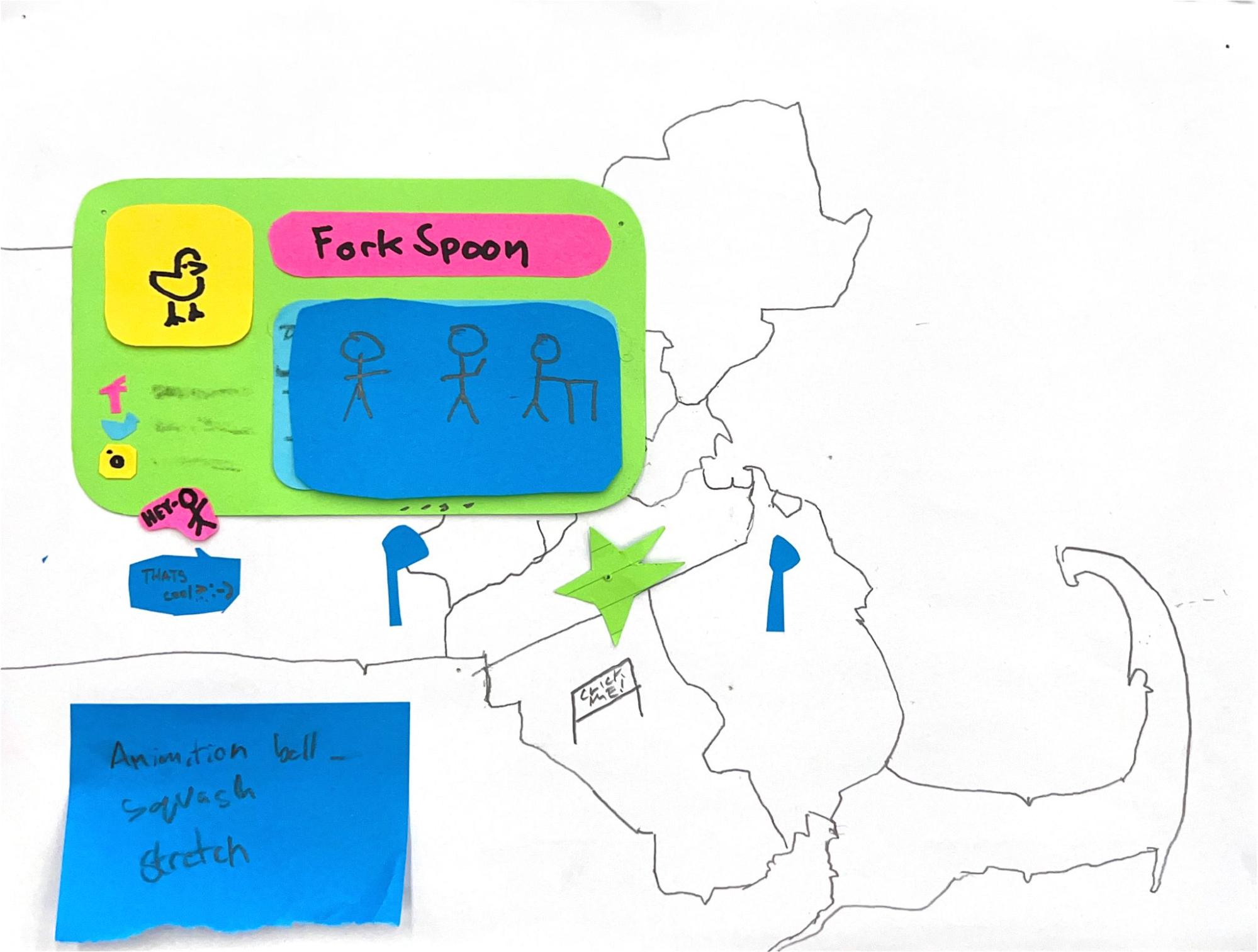
Figure: AniMap local view, with some co-design notes and features such as a pin board for events, and multiple slides on the profile.
In our second co-design we were able to meet physically, with a local boston independent animator, who we'll call by a pseudonym of “Bug”. We took several paper prototypes, scissors, and sticky notes to a south station cafe, and got to dive into the nitty gritty of the form and function of the user interfaces. We were able to take the idea of a physical pinboard proposed by our first co designer, and get sketches of fun and playful ways to bring this interface to life. Shown below, our co-designer came up with 3D telephone poles with stabled flyers, a store front window, a cork board with digital push pins, and even a page cluttered with popups to wade through.
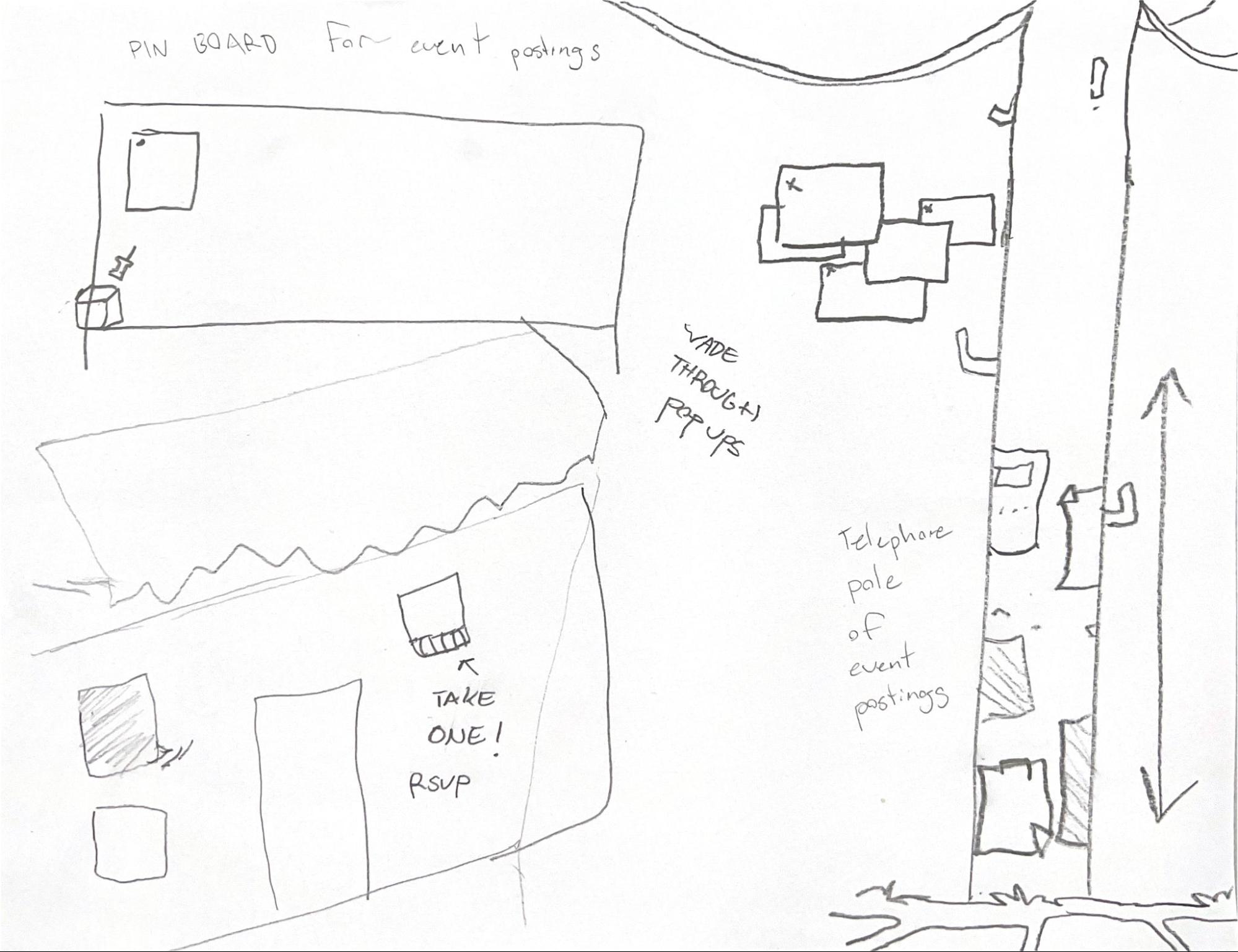
Figure: Taking a suggestion for a physical pinboard event posting interface from , and co-designing the look further in our second co-design
For Bug, one thing that animators are directly attracted to is visual intrigue, and attention to detail. Bug wanted to see interesting sound effects, and skeuomorphic visual features. Bug also suggested borrowing squash and stretch animation principles to guide motion of UI elements on the site. While for many user groups, these could potentially add clutter, almost all animators we spoke to have a highly visual workflow, and are accustomed to and even enjoy some artful visual complexity. Animation learning and blog sites like https://ingoraschka.com/ (bright colors/ motion warning!) are a prime example of how animators have formed their own niche web interface styles that fly in the face of websites trending to simpler and simpler forms of themselves.
Bug was also excited about highlighting the creativity of animators on AniMap, and expressed a desire for further structured customization of profile pages. Shown below, Bug had several ideas including being able to create your own rigged character that could wander your page, uploading background gifs and images, draggable profile elements to customize the layout, and suggested looking to gaia online for inspiration, a forum based communication platform.
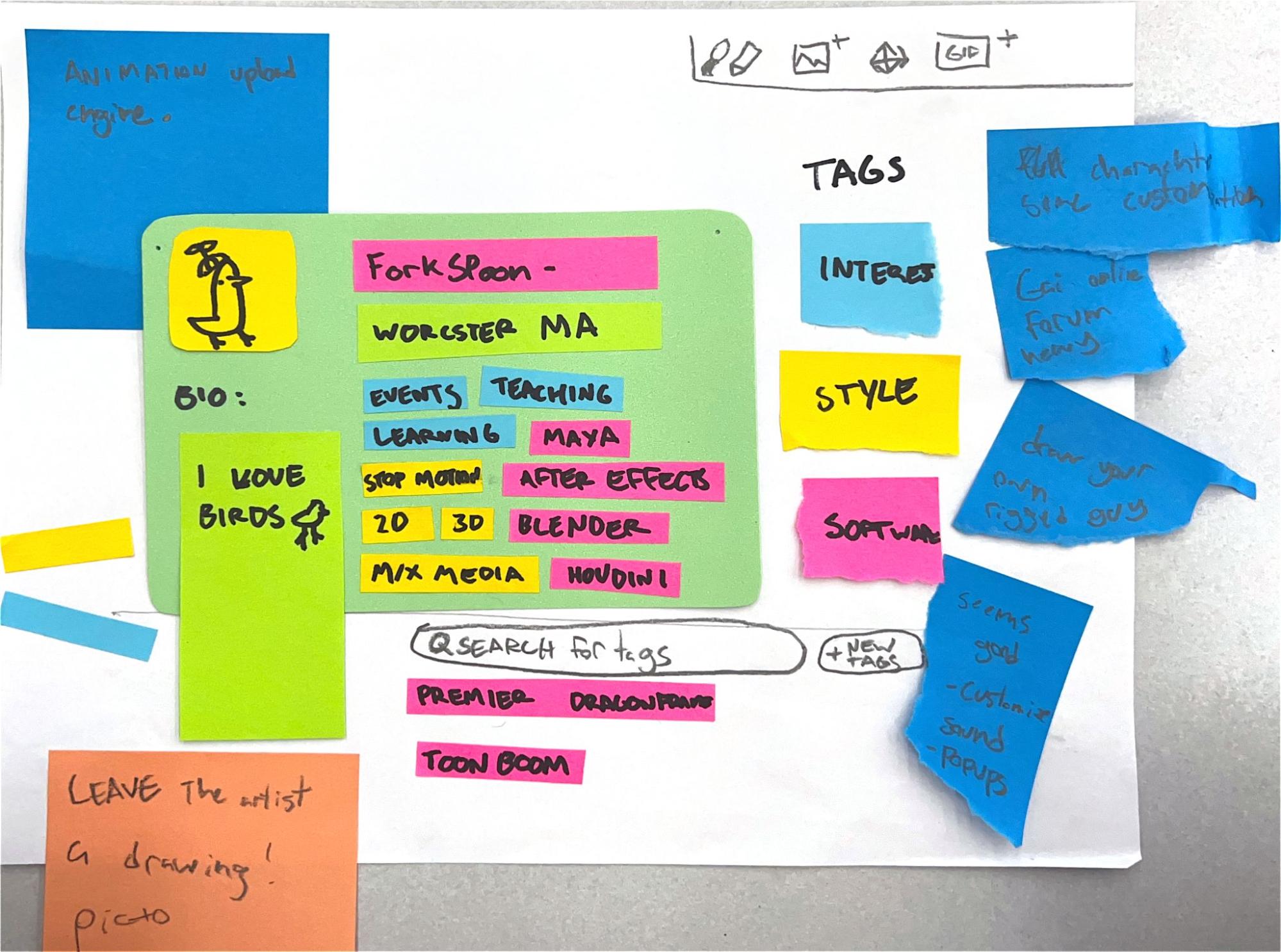
Figure: Co-design notes on further profile page customization of the map
Overall, Bug enjoyed our core features, such as searchability, and thought tag categories were great and helpful, as well as artist bios and demo reels. But Bug really emphasized something we've heard in other interviews as well, which is that visual playfulness is important when designing with and for artists and animators. These values align closely with the hobbyist hannah persona, as well as indie sock, who both enjoy artistic fulfillment and love of the craft above all else.
Bug also secondarily enjoyed the animators space and reanimate projects, because he believed they both were tools missing from the toolkit of animators and organizers. But he also wished they could somehow be incorporated into the map, as part of a border toolkit of social media meant for animators. Bug enjoyed the concept of a visual interface matching animation software tools, but stressed the importance of choice, and that unless lots of different softwares were covered, someone might feel left out.
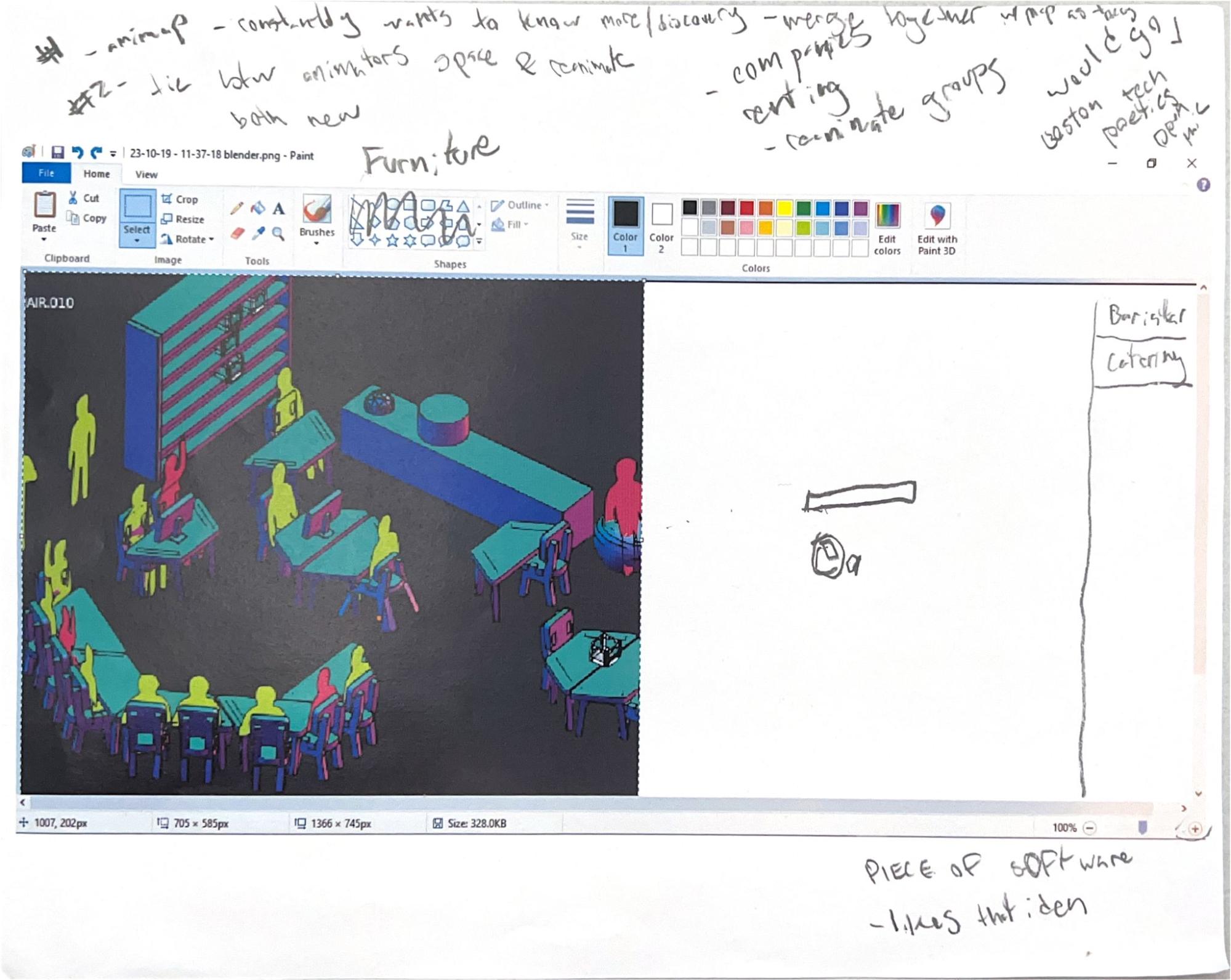
Figure: Co design notes on simplified Ms-pain mimicking animators space layout
Filtering/Searching
One of the things that came up multiple times in our user research and interviews with a few independent animators is that animation can be a very lonely career. In response, our team is focusing on ideas that not only promote connection but facilitate the process in some way to make it easier. All of our ideas act as a hub for animators to gather, explore, and meet other animators. As a result, we expect to have large quantities of data available on all of our ideas whether it is lists of animators or lists of events. One of the most important features our designs will share is how the user will filter/search through this data. Filtering and searching will manifest very differently for each idea. In the following pages, you'll get to explore how searching/filtering plays into each idea.