REFLECTOR
A one meter diameter reflector, deviating less than one centimeter across the surface from an idealized parabola, to focus the RF signals from a satellite into the antenna feed
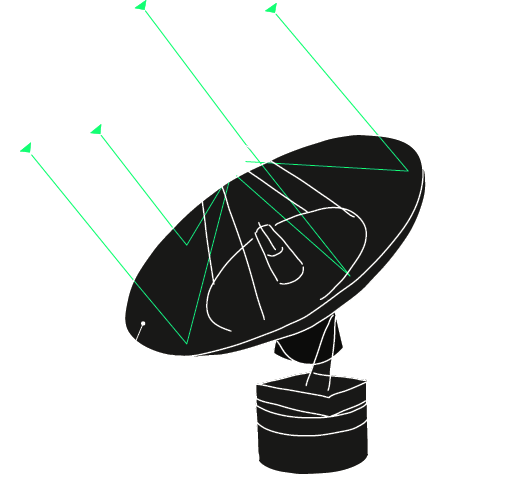
Diagram Showing Function of a Ideal Reflector
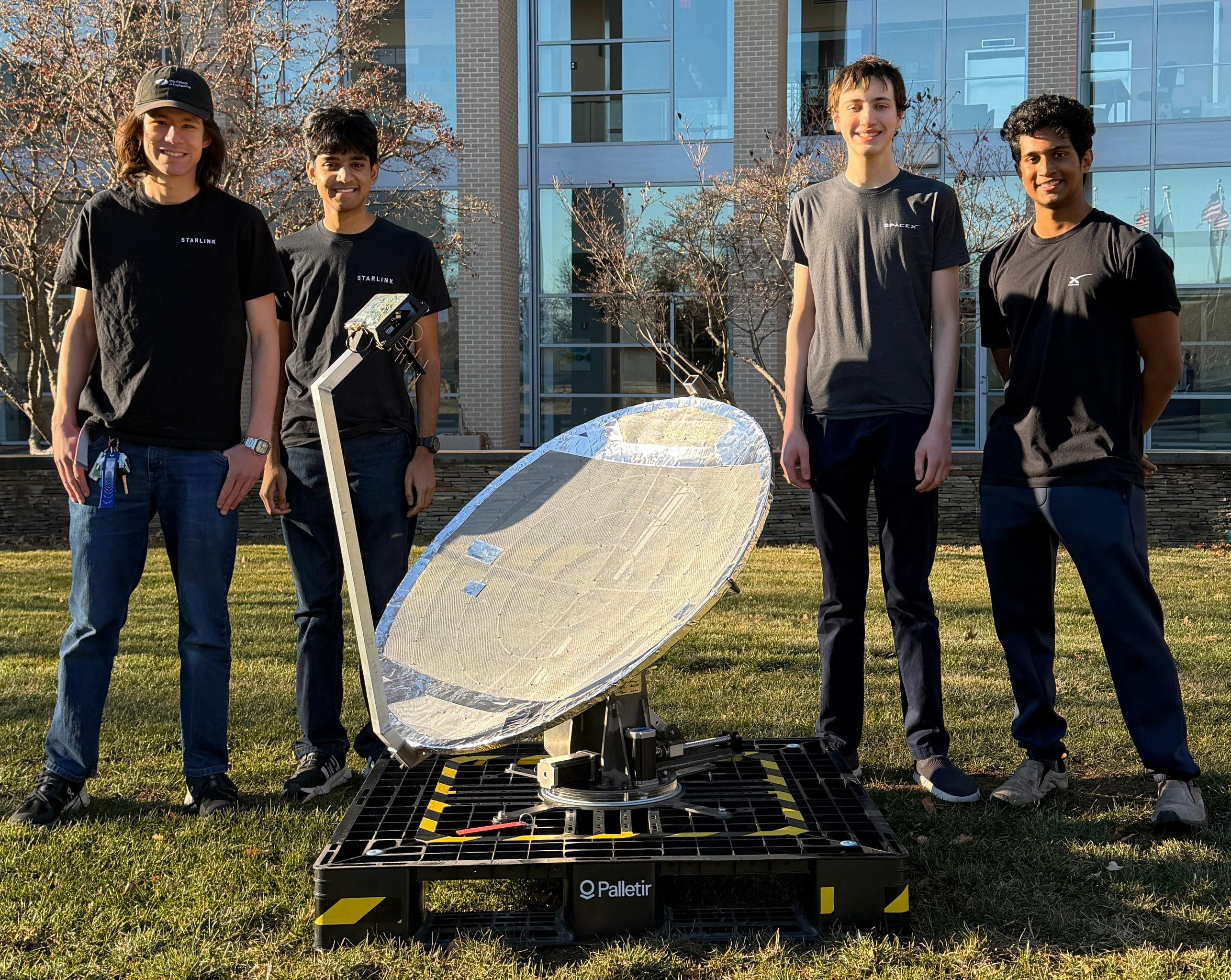
High Gain Reflector Mk II
Minimum Viable Product | Completed: 12/02 | Accepted: 12/14
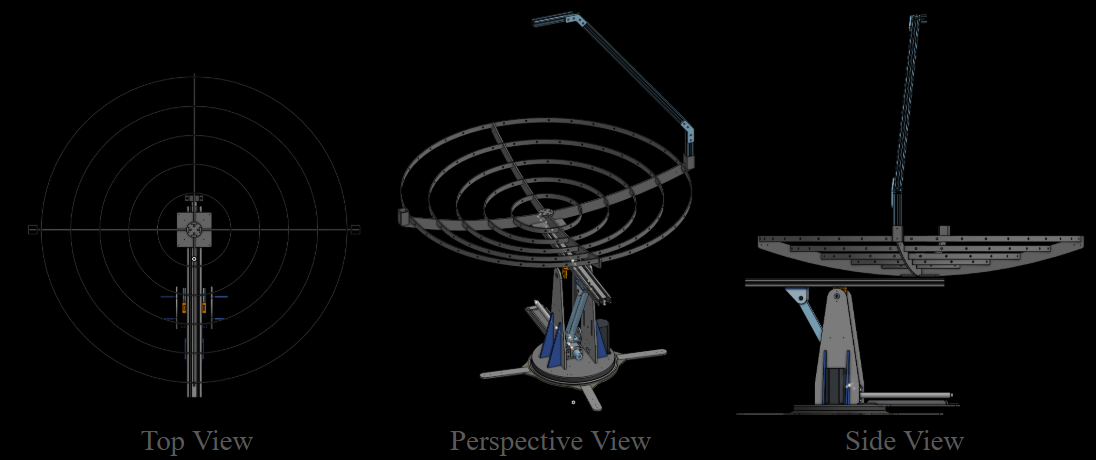
The Mk II reflector was built using the same geometry as the Mk I reflector, but out of steel instead of wood. There were small manufacturability changes made to the design, but overall it was very similar. Steel was selected as the material for its easy workability, relatively low cost and across-the-board robustness as a material. Other material choices such as Aluminum were considered, but ultimately not selected because they would be too expensive, fragile or hard to assemble. The main disadvantage of the material choice is weight, but we were able to work around these issues. The dish was assembled from a set of waterjet cross-arms onto which hoops rolled from strip steel were welded. It was, once again, meshed with an Aluminum window screen, which proved effective enough for our use case in the Mk I reflector test campaign. The mesh is tied down to the dish through 120 holes in the concentric hoops. As with the Mk I reflector, the Mk II features a VESA mount, although the Mk II has dual mounting points for removable feed arms instead of the permanently mounted setup on Mk I. We were able to make manufacturing design improvements to our three element Yagi-Uda antenna feed, allowing us to quickly create many feeds for our project.
CAD
High Gain Reflector
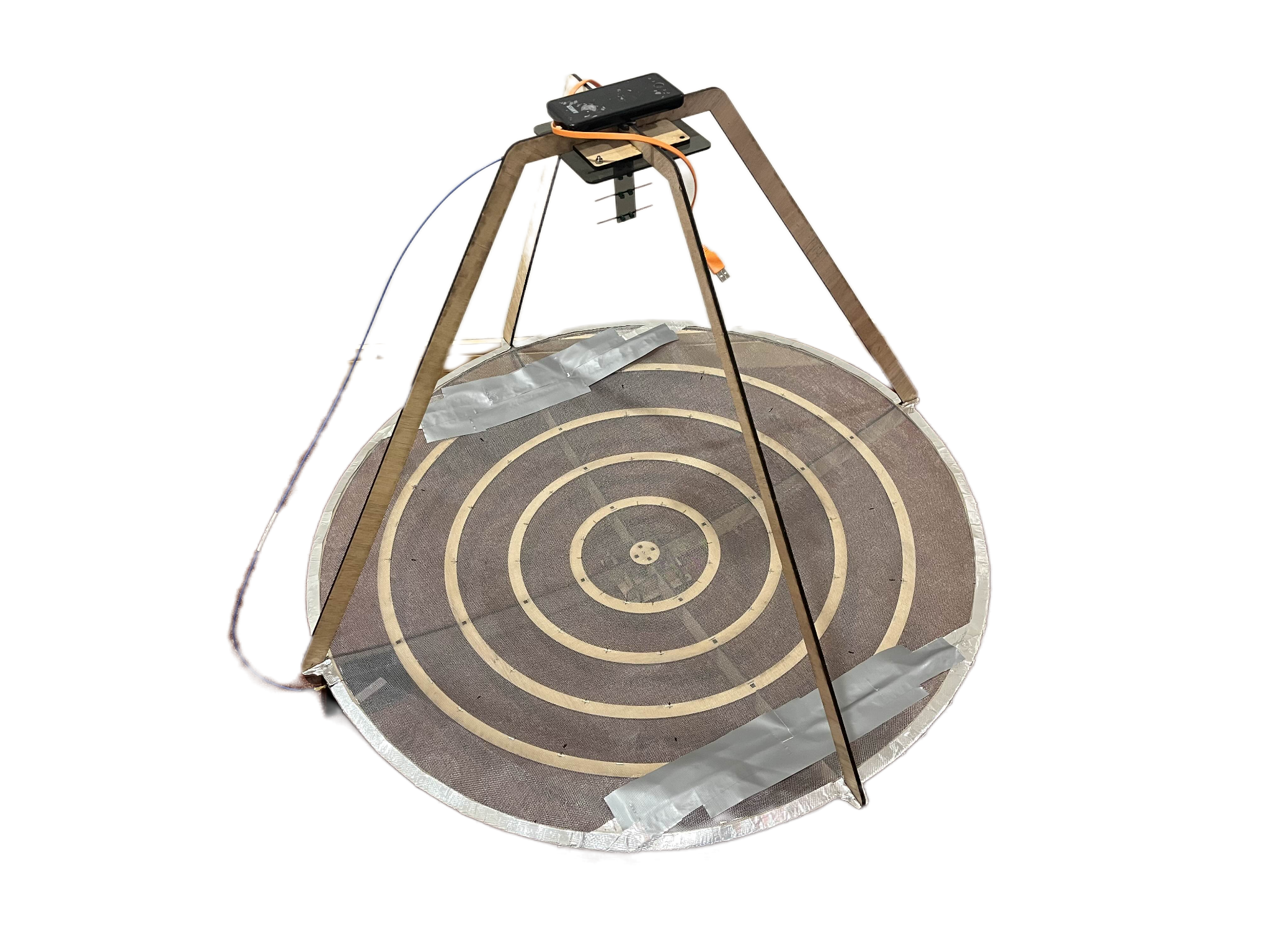
Minimum Viable Product | Completed: 11/04 | Accepted: 10/28
The Mk I reflector was built out of ¼ inch plywood in order to test the overall geometry of the reflector. It was built out of plywood to allow for fast and low-cost iteration on the bulk reflector geometry. It was designed to be easily mounted for testing, so the base features a VESA hole pattern for attaching the dish to monitor stands or similar. We meshed the wooden structure using an Aluminum window screen. We were able to show that the geometry was effective enough to receive signals from the GOES-19 weather satellite. We were able to use the Mk I reflector to test a variety of antenna feed geometries, eventually arriving at a reasonably efficient three element hair-pin matched Yagi antenna design.
Sketch Model
Form Factor Model | Completed: 10/20 | Accepted: 10/21
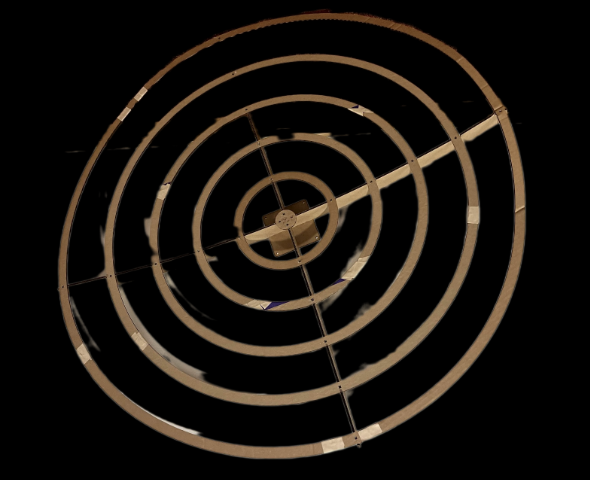
The reflector sketch model was built out of ¼ inch cardboard in order to verify the feasibility of our construction techniques on an extremely short timescale. We were able to use it for size and fitment testing in some of our early prototypes and sanity check the overall sizing constraints for our project.